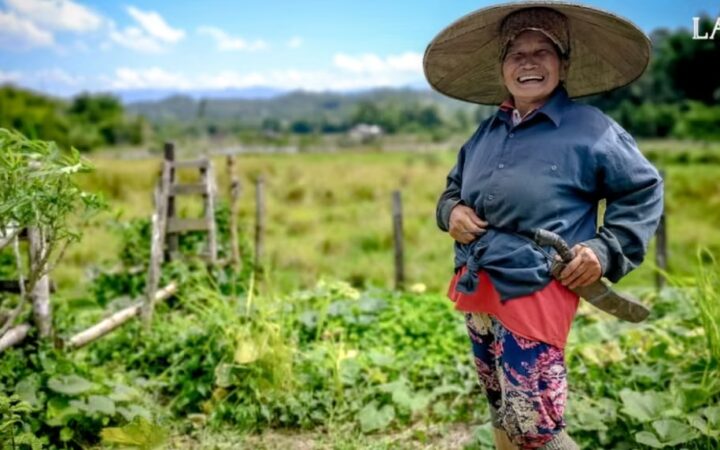

Most rice on Malaysian shelves is consistent, mild, and designed for volume. Sarawak’s heirloom varieties behave differently. Grown at roughly 3,000 feet in the Lawas highlands by Lun Bawang farmers, they carry the cool mountain climate, mineral-rich soil, and clean spring water into the grain itself. The result is rice that smells faintly nutty or floral, cooks to a soft yet distinct texture, and holds its character even when paired with strong flavours.
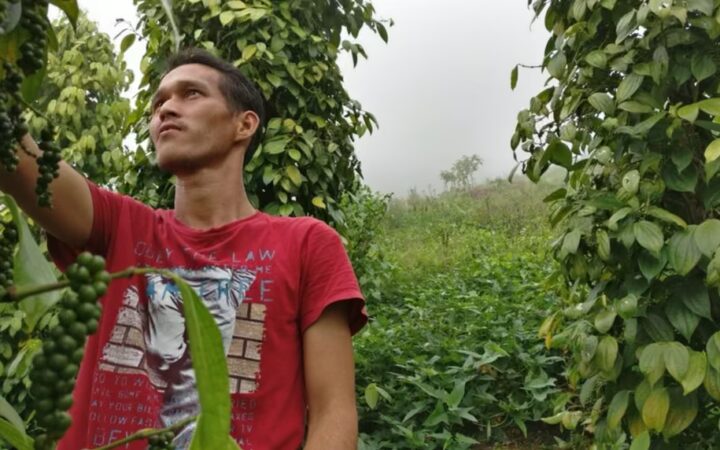
Langit Collective works directly with these farmers, buying excess harvest at the farm gate at roughly double the local market rate. The higher price is not a premium for branding; it is what keeps multi-generational seed selection and hand harvesting viable.
What sets the main varieties apart
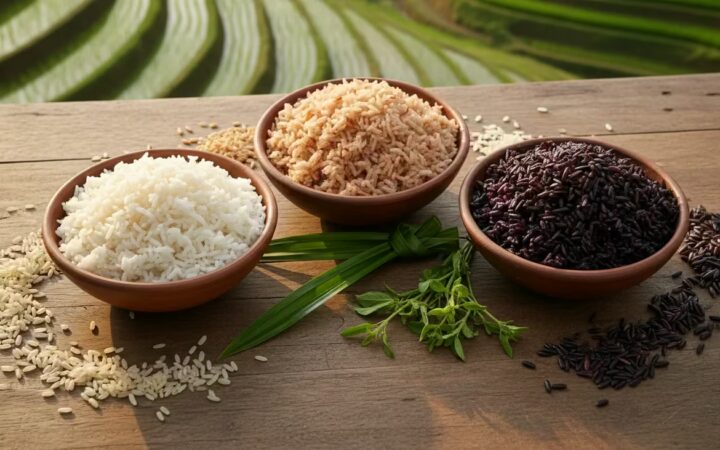
- Beras Adan (white): Short-grain, marble-white, lightly sweet and slightly sticky. Excellent for porridge or simply steamed. Many people notice a clean fragrance that commercial fragrant rice does not match. Cooking ratio is roughly 1:1 water to rice; no soaking required.
- Beras Sia’ (red): Semi-polished, nutty, and gentler in mouthfeel than typical brown rice. Chefs often use it when they want colour and a mild earthiness without the heavy chew of fully unpolished grain.
- Beras Keladi and Beras Rumie (black/purple): Deep colour with pandan-like and nutty notes. Higher in antioxidants linked to the pigmented bran. They hold up well in porridge and as a side that adds visual contrast.
These are not hybrid high-yield varieties. They mature more slowly, yield less per hectare, and are planted from seeds saved and selected by farming families for generations. That is why you will not find dozens of identical bags on a supermarket shelf.
Simple cooking notes that protect flavour
- Rinse lightly (or not at all for Adan if you want maximum aroma).
- Use the 1:1 ratio for Adan; add a little more water for red and black if you prefer softer grains.
- Rest 10 minutes after cooking with the lid on.
- Once opened, store in the fridge to keep weevils away and preserve freshness.
Why the highland origin matters
Cooler temperatures (often 19–22 °C in similar highland areas) and clean water slow the growth cycle. Slower growth concentrates flavour compounds. The same conditions that produce distinctive rice also make large-scale chemical farming less common, which is why many of these grains are grown with minimal synthetic inputs.